Menu

PMC’s 2025 Economic Summit: “America First meets American Capitalism”

December 2025

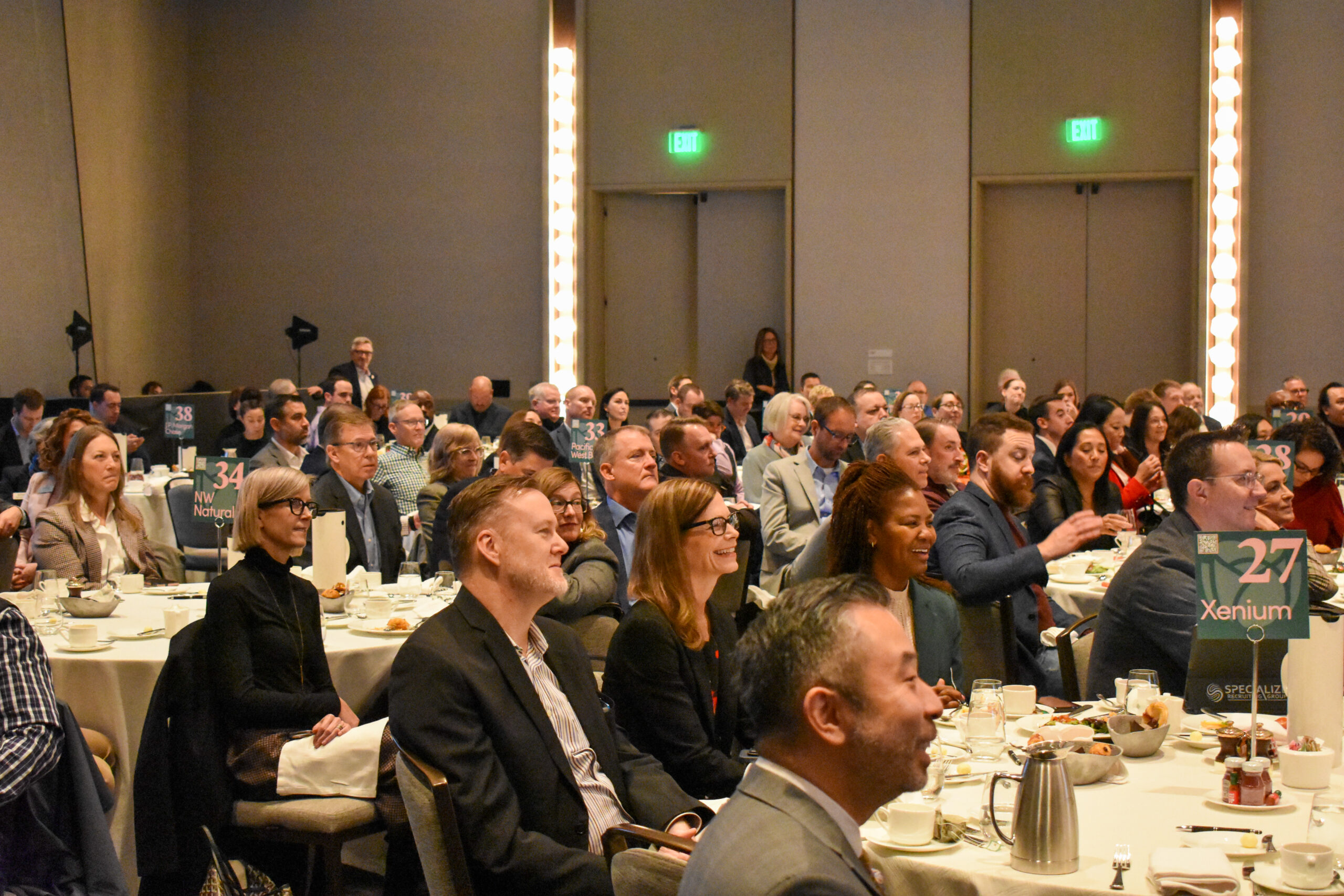
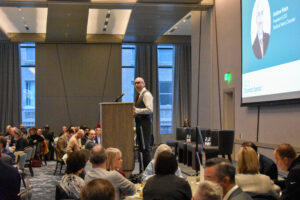
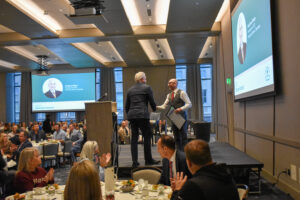
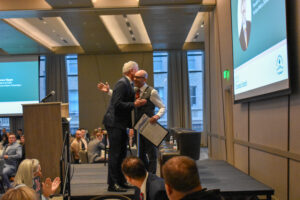
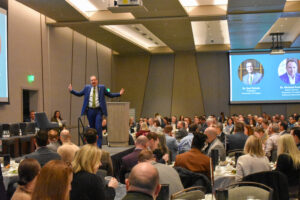
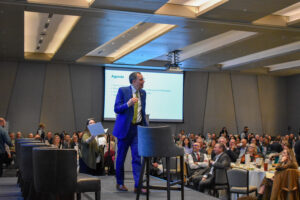
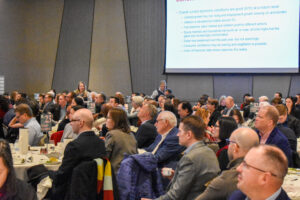
On Wednesday, December 4, the Portland Metro Chamber hosted the 2025 Economic Summit presented by Ferguson Wellman, an important annual presentation on the economic trends affecting Oregon and the nation.

Business leaders and policymakers convened in the Ritz-Carlton in downtown Portland to hear insights from economic experts on the current state of the economy; evolving dynamics of trade, investment, and regional development; and on the critical role of higher education in shaping competitive and resilient economies.

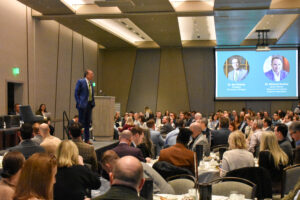
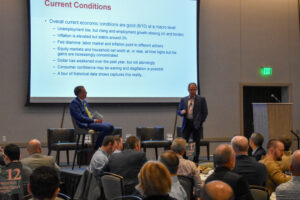
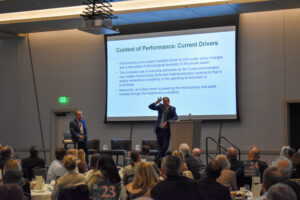
This year’s keynote speakers were Dr. Karl Scholz, President of the University of Oregon, and Dr. Michael Knetter, Senior Advisor at the Wisconsin Foundation and Alumni Association. Drs. Scholz and Knetter provided an overview of our nation’s recent economic trends, reviewed current drivers of economic behavior and performance, offered thoughts on the America First policy implemented by the current administration, and opined on near and long-term outlooks for the United States’ economic future. Highlights of the presentation are included below.

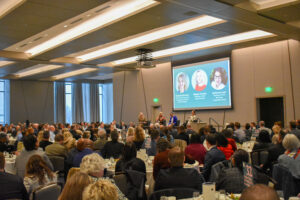
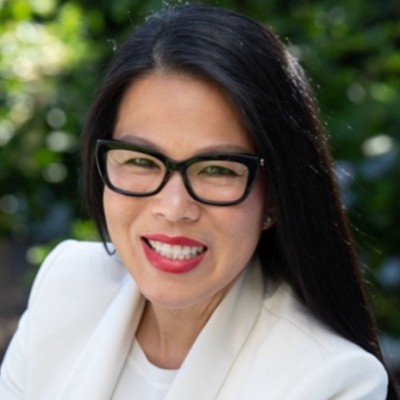
Following the address, the audience heard discussion from a panel of local business leaders composed of Kimberly Branam, Chief Trade and Economic Development Officer at the Port of Portland, Megan Conway, President and CEO of Travel Portland, and Katherine Lam, President and CEO of Bambuza Hospitality Group. Panelists discussed trade trends shaping Portland’s economy, how Portland’s trade infrastructure can better support local entrepreneurs, and how Portland is working to balance tourism with economic growth.

Key Takeaways

Current national economic conditions

  • Unemployment in the U.S. is low but rising, and employment growth is slowing (due to AI implementation and a decline in immigration into the country).
  • Inflation is elevated but stable around 3%.
  • Equity markets and household net worth are at or near all-time highs. However, the gains are increasingly concentrated.
  • The dollar has weakened over the past year, but not alarmingly.
  • Consumer confidence may be waning and stagflation is possible.

What sets the U.S. economy apart?

  • The United States economy is the most dynamic economy on earth—AI is the latest manifestation of our dynamism—and innovation makes the U.S. exceptional.
  • The conditions for exceptionalism are broad and deep capital markets, a stable dollar, the rule of law, competition, entrepreneurial culture, management talent, and dominance in higher education.
  • Government policies created the conditions for innovation, but the private sector guided resource allocation to the best opportunities.

AI dominance

  • An AI and tech boom is powering the real economy and asset markets through the heightened uncertainty.
  • “The Blob,” a group of 41 AI-related (direct, utilities, capital) companies have accounted for a huge amount of measured economic growth

America First: policy shifts, motivations, and uncertainty

  • The increased use of executive authorities by the Trump Administration has resulted in myriad policy shifts and heightened policy uncertainty that is adding tremendous complexity to the operating environment of businesses.
  • America First policies are likely best viewed as meeting non-economic goals: maximizing control, power, and wealth by the administration; national security in the face of U.S.-China rivalry; and re-election.
  • In the long term, America First policies will erode the foundations of American Capitalism.
  • In the short term, the America First policy changes have mixed impacts on macro performance.

Trade policy

  • Engaging in trade spats with traditional allies is unwise. The U.S. needs low-wage trade partners so we can concentrate effort on the highest value-added sectors.  We cannot go it alone—China has $1B more people than the U.S., so they can be more self-sufficient.
  • Trade deficits are a red herring. They are a natural phenomenon arising from market forces in a wealthy country with great investment opportunities, high demand for consumption, the world’s reserve currency, and large fiscal details.
  • Net foreign investment has helped bid our asset prices and eliminating trade deficits will, by definition, eliminate net foreign investment.

Higher education's role in economic development and tech leadership

  • American higher education has a world leadership position rivaled only by our leadership in technology.
  • American higher education attracts the best and brightest from around the world.
  • The founders of the largest companies often come out of our top universities. Many of these leaders are immigrants or first-generation students.
  • The synergies between research universities and tech are evident in tech company locations.
  • We need to preserve our leadership in the foundations of the knowledge economy. This is critical to our future economic success.

Long and short-term economic concerns

Short-term:

  • Several imbalances (dependence on AI theme; impact of AI deployment on labor market; inequality in income, wealth, and opportunity fueling populism and nationalism; growing fiscal imbalance) could disrupt status quo.
  • The imbalance in attribution is also concerning.

Long-term:

  • America First policy has increased the role of the executive branch in the economy.
  • The America First agenda is a massive break with past policy that has supported the foundations of innovation and American capitalism.
  • Major shifts in policy aimed at national security concerns will increase stagflation risk.
  • The long-term outlook is worse if the foundations of dynamism (trade, competition, and human capital development and attraction) are under attack.

Each of us here are Oregonians. We hold the ultimate power to support our local businesses. So be the tourists in our city, and then tell the story, share it: how good Oregon is, how friendly are our people, how high quality are our products.

Katherine Lam, President and CEO of Bambuza Hospitality Group

Event Photos

Thank you to our Sponsors!

Presenting Sponsor

Event Sponsors

Skanska logo

Event Partners

Table Sponsors

Alaska Airlines
Bank of the Pacific
Brown & Brown
Ferguson Wellman
Hoffman Constructions
J.P. Morgan Chase
KGW Media Group
Killian Pacific
Leadership Portland
Metro
NW Natural
OnPoint Community Credit Union
Oregonian Media
OSU Foundation & OSU College of Business
Pacific West Bank
Perkin & Co
Port of Portland
Portland Timbers
Prosper Portland
Quinn Thomas
Skanska
Sport Oregon
Summit Bank
Travel Portland
Unico Properties
University of Oregon
Walsh Construction
Xenium